A sea cruise is not a lazy weekend on a calm lake where, if it rains, you reach the first pier and go for fried fish. At sea - regardless of whether you are sailing on the Baltic, Adriatic or Atlantic Ocean - open water imposes its own rules. The weather at sea can change in the blink of an eye: from a gentle breeze to gusty winds, a large heel angle and a wall of water in the cockpit.
If you pack incorrectly, your cruise will turn into a fight for survival and the longest week of your life. If you pack wisely, you will get an adventure that you will remember for years.
Before you open the wardrobe, one iron rule on which your fate on the yacht depends:
Pack yourself in a soft bag. Any rigid suitcases, suitcases on wheels or hard racks are absolutely prohibited from entering the yacht. On a boat, space is calculated down to the centimeter. The bag must be able to be rolled into a tight roll and squeezed into the deepest corner of the locker. Choose a soft duffel bag, a roomy backpack without a frame or a solid sports bag. Period.
Here's an uncompromising list of what you need to take on a sea cruise - divided into the essentials and the little things that turn difficult sailing into pure comfort.
No responsible skipper should be allowed on the gangplank without this kit.
A real raincoat (Jacket + Dungarees)
The city raincoat will fall apart at the first serious splash of salt water. You need a dedicated storm jacket with a good membrane. Trousers must have a high-waisted dungaree cut - when you sit on a cold, wet laminate in the cockpit, the wind can blow away your kidneys and roots in a few minutes.
Shoes: Traction and zero marks (Non-marking)
A deck at an angle and flooded with water can be as slippery as ice rink. You must have shoes that are in good working order - with a sole that "sticks" to wet laminate or teak wood anddoes not leave black scratches. Black marks on the deck guarantee that you will have to scrub the deck on your knees at the next stop. For more difficult conditions, we recommend Wellington boots to protect your feet from getting wet.
Synthetic sleeping bag (Recommended comfort zone: adapted to the body of water)
Down is great for the mountains, but loses to moisture at sea. When the down becomes moist from the sea air, it loses its insulating properties and turns into a cold rag. A good synthetic sleeping bag keeps you warm even when it catches a bit of sea breeze.
You don't dress "nice" on a yacht. You dress in a modular fashion.
Thermal underwear (Merino is king)
Merino wool has two magical advantages: it warms like crazy and does not absorb odors even after a few days of wearing it under a storm jacket. Technical synthetics will also work, as long as you avoid regular cotton.
Insulating layer (2x Polar / Softshell)
It's always better to have two thinner fleece sweatshirts than one thick, stiff sweater. It is easier to regulate body temperature when physically working with capstans and ropes.
Sailing hat and gloves
Night watch at sea - even in warmer waters - can draw heat from the body. A warm hat covering the ears is essential, a baseball cap for warmer waters. Additionally, sailing gloves (fingerless) will protect your hands from burns from working sheets and halyards.
Technical socks (Spare!)
Always have at least one pair of dry socks hidden deep in a dry bag. Nothing improves morale at night like changing wet socks to dry ones.
Headlamp with RED light
The red mode is an absolute determinant of sailing savoir-vivre. When you go below deck at night, the white light blinds the sleeping crew and destroys your eyesight's dark adaptation. Red light allows you to see in the dark on the navigation watch and does not bother anyone.
Personal first aid kit + Seasickness medications
Don't play the hero. Even experienced sailors suffer from seasickness. Put Aviomarin, dimenhydrinate or tourniquets in your pocketbefore leaving the port heads. Once he starts throwing the yacht on the waves, it will be too late to swallow pills.
Documents and insurance in a waterproof case
ID/passport, EHIC card, private insurance (be sure to check whether the policy covers sea/ocean navigation) and a sailor's book to enter the miles sailed marine.
These things distinguish someone who simply "survived" a sea cruise from someone who spent it in complete comfort:
Sunglasses with a string and a float: The sun reflected from the water can damage your eyesight. And without a string, your favorite glasses will fall into the water at the first sharp turn.
Powerbank (Min. 20,000 mAh): You only have 230V power supply in the marina after connecting the cable to the shore. On the route, electricity is a rationed commodity, and navigation and cameras quickly consume the battery.
Microfiber towel: A cotton towel simply will not dry in sea conditions. It will hang and stew. Microfiber dries in the wind in a few minutes.
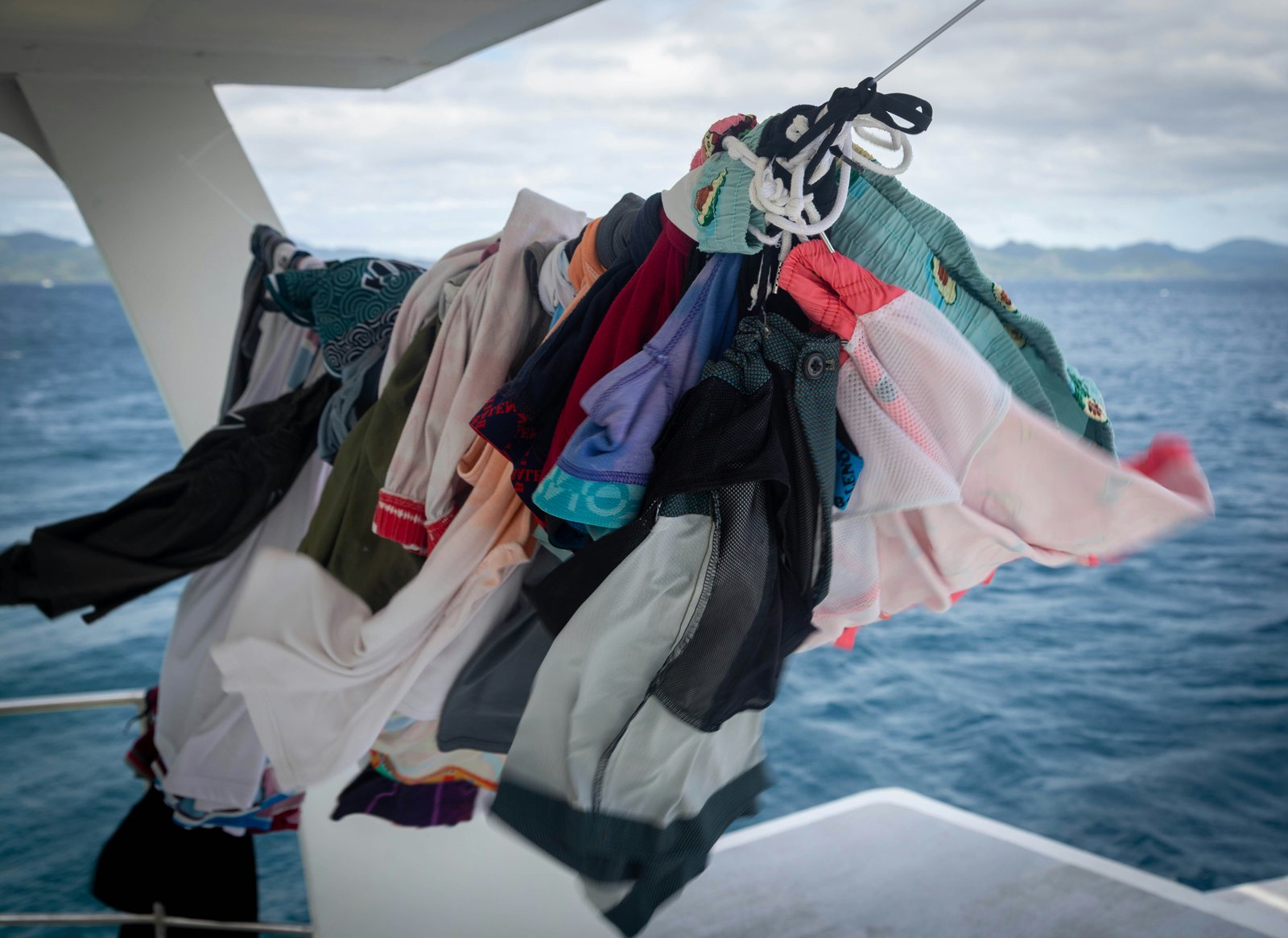
Washing pegs: It looks inconspicuous, but try to dry anything on the railing at a wind of 4-5 Beaufort without clothes pegs. The sea will quickly take away your favorite clothes.
Waterproof bag (Dry Bag - Grab Bag): A small 5-10L bag for your phone, wallet and keys. Indispensable when you change to a pontoon (dinghy) or when water pours onto the deck.
No cotton under the storm jacket. A cotton T-shirt under the storm jacket acts like a sponge. It is soaked in sweat and sea moisture and instantly cools the body. Choose only technical synthetics or merino wool.
Pack your things in waterproof string bags. Even if water pours into the locker (which is the norm at sea with a large tilt), your dry clothes inside the bag will remain untouched.
Reduce your equipment. If you think you need 7 pairs of pants and 10 t-shirts for a week - set aside half. What counts on a sea yacht is functionality and quick drying, not a fashion show.
The sea requires respect and good preparation, but it rewards you with freedom and emotions that you won't get anywhere else. Pack wisely, close your bag and see you on the other side of the port heads!
And what piece of equipment do you not throw away mooring lines on a sea cruise without? Do you have your own reliable idea for the sea? Write to us: office@sailwith.pro
